This list is from 25 Books Every Christian Should Read, edited by Julia L. Roller. The editorial board included Gayle Beebe, James Catford, Richard J. Foster, Emilie Griffin, Frederica Mathewes-Green, Michael G. Maudlin, Richard Rohr, Lyle SmithGraybeal, Phyllis Tickle, Chris Webb, Dallas Willard, and John Wilson.
In selecting this list of twenty-five books, the editorial board has tried to identify a handful of the most outstanding books ever written on Christian faith and the life of prayer and discipleship. These books are an extraordinary distillation of wisdom about following Jesus written by some of our greatest saints, poets, and thinkers over the last two thousand years. There are no easy reads on this list. Some are more accessible than others, of course, but every one of these books is deeply challenging. But even here we are reminded that the treasure uncovered in the field can only be bought at great cost.

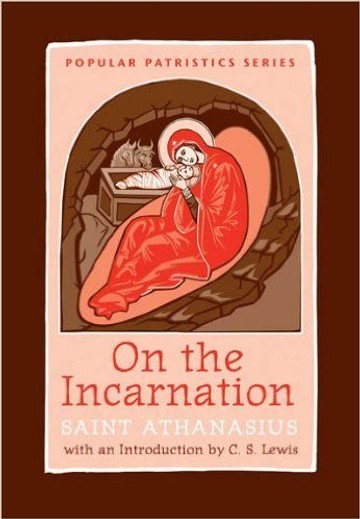
In Athanasius’s seminal work he explains how and why God became man in Jesus Christ, effectively refuting a heresy popular at the time of this fourth-century writing (that Jesus was not equal to or of one substance with God). C. S. Lewis said of this book, “When I first opened it I discovered by a very simple test that I was reading a masterpiece, for only a mastermind could have written so deeply on such a subject with such classical simplicity.”

Widely regarded as Christianity’s first spiritual autobiography, Augustine’s Confessions is the story of his restless heart’s journey to God. Confessions established Augustine as the Christian apologist, after the apostles themselves.

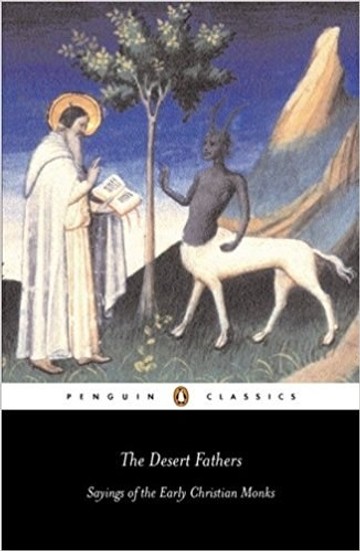
“Christians might wonder what the words of Jesus, ‘Deny yourself, take up your cross, and follow me,’ might mean; these Sayings of the Desert Fathers are the writings of some who took those words very seriously and stopped at nothing in striving to discipline or re-direct every aspect of their physical, intellectual and psychological lives toward God.” — Frederica Mathewes-Green

With frequent references to the Bible, the Rule is an instruction book for loving God and others, honoring others, and living an ascetic, hopeful, and devout lifestyle. This Rule written more than a thousand years ago is still used in almost every Western monastery, earning St. Benedict the title Father of Western Monasticism. Obviously it is hugely important for those who choose to live cloistered lifestyles, but it holds great significance for anyone seeking a life of yielded submission to Christ.

In this Italian poetic masterpiece, Dante’s journey through hell, purgatory, and, finally, heaven mimics the soul’s journey toward God. The author Dorothy L. Sayers said, “The Divine Comedy is precisely the drama of the soul’s choice. It is not a fairy-story, but a great Christian allegory, deriving its power from the terror and splendour of the Christian revelation.”

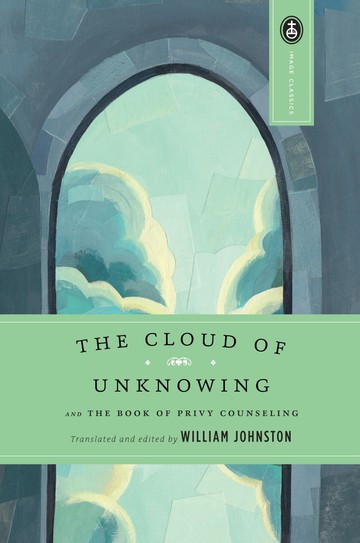
The Cloud of Unknowing is an essential work of the contemplative tradition. During the fourteenth century it was passed from monastery to monastery. Over the centuries it has also become a valued devotional text for laypeople for its thoughtful lessons on how to pray. As Chris Webb (a former president of Renovaré) explains, “The Cloud would teach you how to pray. It goes past liturgy or quiet times or techniques. It takes away all that stuff, and it says, ‘I want to teach you how to sit with God. Even though God is hidden away, that’s okay. Let me teach you how to just be with God!’ And that’s the heart of prayer. Then everything else can follow on.”

Fourteenth-century anchoress Julian of Norwich describes her powerful visions of God, offering us insights into God’s goodness and the shelter we have in God. Rowan Williams, Archbishop of Canterbury, suggests, “Revelations of Divine Love may well be the most important work of Christian reflection in the English language.”

In this unrivaled devotional masterpiece, Thomas à Kempis offers instructions for living a life of devotion to Jesus, characterized by holiness, simplicity, and humility. Thomas More chose it as one of three books every Christian should read. Other fans included George Eliot, John Wesley, and Matthew Arnold. Dallas Willard refers to it as “absolutely indispensable.”

An anthology of writings from the fourth to the fourteenth century by monks and abbots who applied Jesus’ teachings to their own lives. It was assembled on Mount Athos, a peninsula in northern Greece. Apart from the Bible, The Philokalia is the principal spiritual text in the Eastern Christian tradition. The Philokalia focuses less on external rules of behavior and action and more on the inner life — a valuable corrective to the focus on external behavior that frequently characterizes Western Christianity. As Jesus told the Pharisees, it is the inner life that is of the greatest importance.

As the founder of the Reformed or Presbyterian Church, John Calvin is one of the key figures in Church history, and Institutes is his magnum opus. The theology he develops in this book in large part laid the foundation for the Protestant Church as it is today. Building on Augustine’s theology, Calvin is often remembered for his ideas about predestination and his commitment to holiness by way of asceticism. “No other single book from the sixteenth century does more to define the nature of our life with God than The Institutes of the Christian Religion,” writes Gayle Beebe.

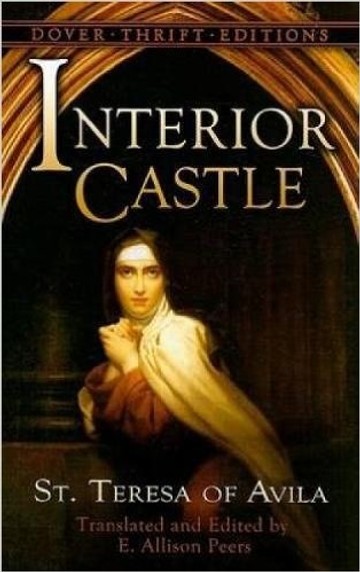
Carmelite nun and reformer Teresa of Ávila describes her vision from God of a crystal globe in the shape of a castle with seven mansions, each of which represents a stage in our faith journey toward union with God. “Teresa is an absolute master of the spiritual life,” writes Dallas Willard, “and possesses an amazing depth and richness of spiritual theology… You can put what she says to the test.”

Dark Night of the Soul is sixteenth-century Spanish Carmelite priest John of the Cross’s poem and commentary about the journey of purification on which God takes us from times of spiritual dryness to an understanding of divine union. Dark Night has been hugely influential in Christianity and still holds a unique place in devotional literature. James Catford writes, “Even to receive a few pages of truth from this book and the Church will be set on fire with a renewed love of God.”

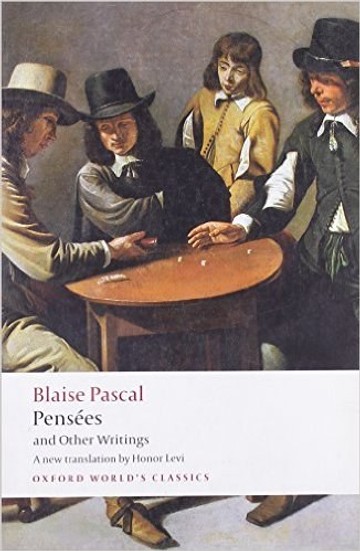
French scientist, mathematician, and thinker Blaise Pascal (1623−1662) is perhaps best known for his contributions to math and science, but late in his life he had a powerful experience of the presence of God that led him to live out the rest of his life in a monastery where he wrote Pensées. A collection of intensely personal meditations on wide-ranging topics — from sin to human suffering—Pensées is a comprehensive, passionate defense of the Christian faith.

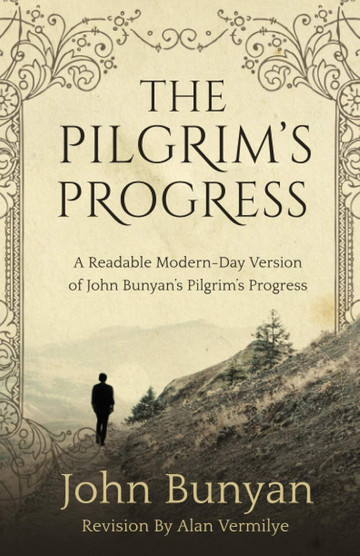
The Pilgrim’s Progress is a biblical allegory about a man named Christian who seeks to find the way to the Celestial City, or salvation. Its popularity and readership approaches that of the Bible. The Pilgrim’s Progress has been beloved for so many years because of the drama of its narrative, the truth and reliability of its doctrine, and its absolute reliance on Scripture. Few works exemplify so well the struggles and temptations we will face on our own journeys — not only the obvious physical struggles, but also our struggles with wanting to be first, being tempted to take an easier path, or to halt all progress.

In this collection of conversations and letters, seventeenth-century monk Brother Lawrence describes how he lives with a constant sense of the immanent presence of God. Brother Lawrence’s message has endured because the idea of being in constant communion with God is such a key part of spiritual formation. As Richard J. Foster puts it, “My whole life, in one sense, has been an experiment in how to be a portable sanctuary — learning to practice the presence of God in the midst of the stresses and strains of contemporary life.”

William Law draws attention to the hypocrisy of those who claim to be Christians but do not bring their faith to bear upon their daily lives. He calls all Christians to make it their sincere intention to please God in all their actions, in addition to just their prayer and church attendance. Law’s message was highly influential both in his lifetime and since. He calls us to an earnest examination of our lives with attention to whether we truly want to live holy lives.

The Way of a Pilgrim is the first-person narrative of a devout Russian peasant who, upon hearing the verse from 1 Thessalonians instructing Christians to pray without ceasing (5:17), sets out on a quest to find out exactly how to do that. After failing to find help from sermons and various wise people he encounters, he meets an elder who speaks of the importance of an accessible way to learn about the Jesus Prayer. The Way of a Pilgrim is an enduring spiritual classic of the Eastern Orthodox tradition. The focus on the Jesus Prayer with a concrete example of how it is practiced is probably its most enduring contribution to the Christian canon.

The Brothers Karamazov is considered one of the greatest works of literature ever written, not least because of the dizzying number of theological questions it tackles — the quest for God, the problem of human suffering and evil, doubt, reason, the monastic life, murder, and morality, to name but a few. It tells the story of three Russian brothers — Dmitri, Ivan, and Alexei Karamazov — and their father, Fyodor Pavlovich Karamazov. Michael G. Maudlin writes, “Dostoevsky is a wonderful antidote to shallow thinking about spirituality.”

Now considered a classic of apologetics, Orthodoxy is Chesterton’s rousing and persuasive description of his intellectual journey from agnosticism to Christianity. Chesterton compares Christianity to various philosophies of his time, including materialism, determinism, and reason, concluding that Christianity holds a freedom that the others lack. Perhaps the most important element of his book for modern readers is his central argument for the importance of tradition. Chesterton’s defense of tradition as “democracy extended through time,” as a consensus of human voices, is strongly compelling.

Nineteenth-century British poet and Jesuit priest Gerard Manley Hopkins expressed his love for God and the unique characteristics of God’s creatures through the striking imagery of his poetry. Emilie Griffin writes, “I use his poetry as prayer. You can take a single line and allow it to lead you into the presence of God.” With Hopkins, we can experience the music of God, the mystery of God, the melody of God’s creation..

Bonhoeffer wrote The Cost of Discipleship in direct opposition to the Nazi regime. He begins the book with a stinging indictment of the churches of his day for not offering enough Jesus. Instead they are preaching yet another man-made dogma to lay over the top of people’s already overburdened shoulders. The Church, he asserts, has forgotten the idea of discipleship. Instead we offer “cheap grace” — coming to church for an hour once a week to receive forgiveness, to live just like the rest of the world without changing anything about our lives. Bonhoeffer minces no words in condemning the theology of cheap grace, saying that it has resulted in “millions of spiritual corpses.”

Unlike so many other classics on prayer, A Testament of Devotion was written by a person involved in the exterior world. As Richard J. Foster writes, “One of the greatest gifts that Thomas Kelly brings to us is an ability to see the Holy in the most common of places and the most unexpected of events. … Each time I leaf through the pages of this book, I know I am in the presence of a giant soul. I am the better for the encounter.” As much insight as we can glean from contemplative books written by and for those who live the cloistered life, here is a book that recognizes and offers solutions to the problems so many of us share with trying to translate an interior focus to a life lived in the busy, noisy modern world.

In this eloquent spiritual autobiography, Thomas Merton describes his journey from the glimpses of God he received as a child to his subsequent conversion to Catholicism and decision to enter a Trappist monastery. The Seven Storey Mountain earned the distinction of being the first religious book ever to hit the New York Times bestseller list, in 1949. Merton’s brilliance and writing talent is evident on every page. His book is credited with inspiring a flood of new converts to the monastic lifestyle. Although by no means a new idea — Augustine’s Confessions provided inspiration for Merton— Merton’s book is emblematic of the modern spiritual biography.

In the early 1940s, with Britain deep in the throes of World War II, the BBC invited Lewis to give a series of live radio broadcasts about the Christian faith. These popular talks were first published as three different books, then collected into the book we know as Mere Christianity. It is Lewis’s explanation of the basics of Christian faith, what “all Christians agree on.” Widely considered a modern classic of Christian apologetics, it is also a passionate invitation to the challenge and the adventure that is the Christian life. Lewis’s background as a committed atheist who became a Christian in midlife makes his perspective very helpful to anyone who struggles intellectually with faith. But it also describes spiritual transformation in vivid and creative terms that seasoned disciples will find illuminating for their journey.

Nouwen’s story begins with a painting. When he sees a reproduction of Rembrandt’s The Return of the Prodigal Son in a friend’s office, he is particularly touched and begins an exploration of his spiritual life by meditating on the painting’s image of the younger son. Nouwen’s message of the forgiveness and welcome that God offers to all of us, even with our prodigal and elder son tendencies, is a powerful lesson. How have we allowed our own lack of self-worth and, at the same time, our overweening pride to talk us into rejecting God’s welcome? Nouwen gives us an important tool to reflect on this question.