
Couldn’t God Have Done Better with the Bible?
LETTER BY BRIAN MORYKON
I was reading Leviticus this morning, as one does in their devotional time, and in the middle of a section on burns and scabs and infections I came across this:
“When a man loses the hair of his head, he is simply bald on the crown and not unclean” (13:40).
It’s a strangely comforting word for someone who collects much of what used to be on his head from the shower drain cover each morning.
I would say the Bible is a bizarre book, but bizarre is relative to the reader’s perspective. It’s also not a book. It’s a library compiled over millennia, as you know.
In reading passages that feel strange to my modern mind, I remind myself how the canon was compiled, how the books were written in various styles in particular places and times. I also remind myself how many times I’ve met God firsthand through these ancient texts, right here in 21st-century America, both in community and in the solitude of my air-conditioned study.
Still, from time to time, a recurring thought bubbles up and tempts me not only to distrust the Bible but to distrust the God of the Bible. It is a sacrilegious and arrogant thought that God already knows but I’d like to confess it to you in case you’ve had similar thoughts. (And if you haven’t, you have my admiration and I request your prayers.)
Here’s the thought.
The infinite God of the universe, who transcends and permeates the cosmos from macro to micro, who sees the beginning from the end and knows the intentions of every heart, whose wisdom and love and beauty are boundless — this God, who has mastery over all language and had all of eternity to do editorial planning, gave us… Leviticus.
And not just Leviticus, with its ritual minutiae, but tens of thousands of words that in the grand scheme of things seem at best superfluous: building instructions and genealogies, repetitive stories and disturbing accounts of violence, passages where God seems insecure and genocide seems ordained.
That is, of course, an unfair and incomplete portrait of the Old Testament. But even a complete and careful digestion of the text can leave some bitter aftertastes.
The New Testament is more agreeable to a modern palate, but it, too, has its share of perplexing passages. And not perplexing as in I don’t get it (there are also plenty of those), but as in I think I get it but can’t see why it’s in here.
I realize I’m being presumptuous. In essence I’m asking God, Couldn’t you have done better on the Bible?, a question that deserves the same response Job got: “Where were you when I laid the earth’s foundation? Tell me, if you understand.” To that I tremble in silence. But I don’t regret voicing, with appropriate reverence, my reservations and doubts. If Job had not voiced his, we wouldn’t have the gift of God’s response.
And that exchange between God and Job reveals what lies at the heart of the Biblical text: the interaction between God and the people of God. That God chose to communicate these interactions in written form through creatures is an act of sheer humility. God could have dropped a completed scroll from the sky. Instead, God breathed into imperfect people to write a text that unveils a patient redemption of messy lives.
It seems like if God breathed the Bible, its meaning would be more obvious and agreed upon. But God knew that our need to grapple with the Scriptures would be an opportunity for relationship not only with God but with each other. Even our disagreements can become a place where God meets us. (As one rabbi said regarding a frequently debated theological idea: if either side wins, all of Israel loses.)
Still, with all the ways the Bible has been (and still is) used to justify evil, I’ve wondered at times if we’d be better off with no Bible at all. After all, Adam and Eve had no text to guide them. And Jesus, so far as we can tell, never wrote anything down. If his living Spirit dwells within to teach and guide, why return to words frozen on pages?
E. Stanley Jones shares one reason…
I know two brilliant Christians who come to the daily morning devotions without their Bibles. They can meditate, they say. They are both shallow, for they mediate God to themselves through their own thinking — they become the medium. They do not go to God direct as they imagine — they go through their own thinking; they become the mediator. That is why we have to have the revelation of God through the Word. It is God interpreting himself to us. His interpretation of himself is Jesus. When you expose your thinking to him, you expose yourself to God. These words of the New Testament have been in such close contact with the Word that they are vibrant with Life.
Jones’ directness both offends and refreshes. I’d gently counter, backed by saints through the ages, that there are reasons and seasons to put the Bible down and encounter God wordlessly through other senses. (The Bible Project’s Tim Mackie, for example, encountered God through huckleberries, a story you have to hear.) But to Jones’ point, encounter and revelation go hand in hand. If we want to push off into the cloud of unknowing through wordless centering prayer, we need solid ground from which to depart and to which we can return. That’s why our invisible Maker, despite knowing how poorly we’d steward it, gave us a visible text: the benefits of the written word of God outweighed the risk.
Jones rightly points us to God’s greatest revelation, which isn’t Scripture but the one to whom all Scripture points. It is possible to be exquisitely familiar with the sacred Hebrew texts, knowing even the intricacies of the original languages, and completely miss the Christ of which they speak, even when he’s right in front of you (John 5:39 – 40). And there are certainly plenty of places, like Leviticus, where the untrained eye will have to search hard to find him. But if you’ll seek the Scriptures with a humble heart, not only for understanding but communion, he’ll meet you there.

Brian Morykon
Director of Communications
P.S. We’re so encouraged by how many of you have given to help produce The Streams Course. We’re 83% toward the $200k goal. If you haven’t already, would you consider making a gift so we can make this resource available freely?

Sign up for Renovaré Weekly
Thoughtfully introduced Christ-centered spiritual formation resources.

LET’S DIVE IN...
CURATED BY GRACE POUCH
-
1.
In this bonus episode of Life with God we share the conversation from our recent webinar Shaped by the Word. Host Carolyn Arends speaks with Tim Mackie and Carla Harding about how Scripture functions in the lives of Jesus’ disciples to form us and draw us into a living relationship with Father, Son, and Spirit. Listen to the conversation, or view the full-length video here.
-
2.
In episode 7 of Friends in Formation Tiana Spencer shares about a season of such intense physical pain that even hearing Scripture felt too much to bear. It’s a great conversation between Tiana and James covering listener questions on going through pain, church start-ups, and understanding Dallas Willard’s key ideas, featuring helpful advice from guest contributor Keith Matthews.
-
3.
“Millions of people who say, sincerely, that the Bible is the guide to life,” writes Richard Foster, “still starve to death in the presence of its spiritual feast.” Why is that? The root of the problem lies in coming to the Bible with warped objectives. Read “Seeing the Bible Afresh.”

Grace Pouch
Content Manager
WORTH QUOTING
“No Christian is sound who is not scriptural.”
– E. Stanley Jones (source)
TO CONTEMPLATE
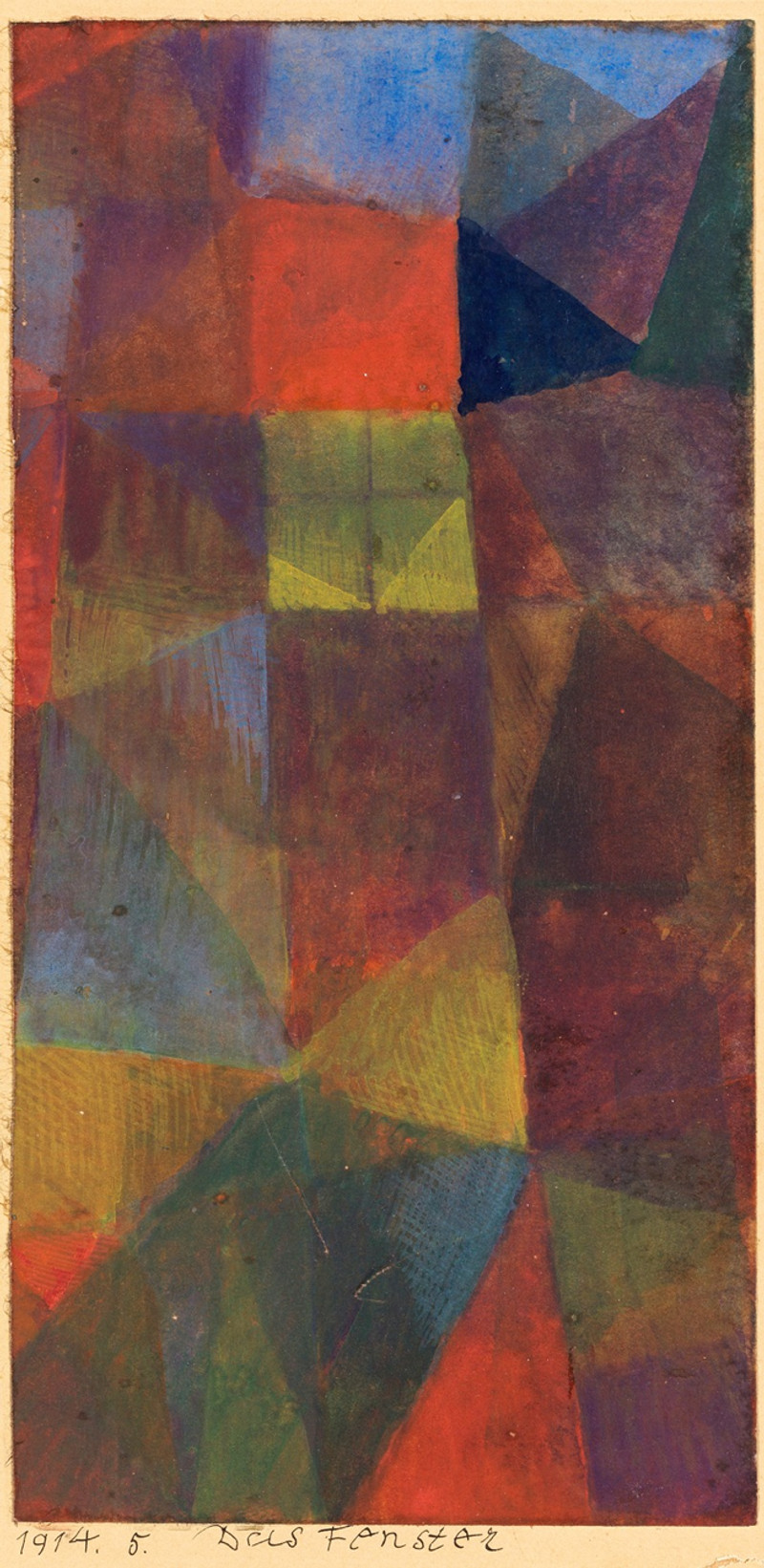
The Window
Paul Klee 1914
(source)
Age after age, through a patchwork of signs and encounters and prophetic words, God has shown himself. He has come as Christ and abides as Spirit. In the Bible, all the colorful pieces come together as a faithful, unified revelation — a window on reality. The light of God’s truth shines through the unique textures and shapes of Scripture’s speakers and writers. Their personalities magnify the Lord’s eagerness to work with and through his people to share the good news. May our partaking of the word be eucharistic — a joyful reception of given truth, which draws us into living communion with our Lord.
TO PONDER
Father, sometimes I prefer other ways of connecting with you than the Bible. And maybe that’s okay for a season. But guard my heart from becoming cold toward the written Word. Because in it, especially in the Gospels — where would we be without them? — I behold the incarnate Word and discern the voice of the living Word, the Spirit of Christ who dwells in me.