
Most True
LETTER BY BRIAN MORYKON
Near the end of A Beautiful Mind—a film about a brilliant mathematician battling schizophrenia — the elderly Professor Nash stands in the hallway dismissing class when a man approaches wanting to talk.
The professor turns to one of his students and gestures toward the man.
“Can you see him?”
She laughs and says yes.
Nash turns back to the man. “I’m always suspicious of new people. Now that I know you’re real, who are you and what can I do for you?”
Few people live with the constant horror of hallucinations. Most of us for most of our life can trust that if we see a person in front of us they are, in fact, really there.
But all of us in a sense hear voices. Thoughts walk into the hallway of our mind — sometimes invited, often not — and speak with words, images, and impressions. Even when our “mind is blank,” our bodies feel subconscious currents of things experienced, heard, seen, and done.
Many times we do not question the solidity and validity of these inner voices of thought. We mistake perception for reality. We assume our interpretation of a situation is the correct one. Sometimes we perceive with factual accuracy, but then fixate on facts we can’t change, giving hospitality to regret.
We may even recognize that a thought-voice isn’t true, or at least not most true. (For example, it’s true we are flawed but truer we are loved.) Our response might be an attempt to shut down or “shout down” the lesser truth, which of course only gives it strength.
What we need is not only a way to discern between competing inner voices but also a way to move toward the voice that is good and true and real.
Here’s where the hallway scene from A Beautiful Mind becomes a kind of parable. Rather than trust or distrust his senses, Nash asked someone he knew was real to verify someone he thought was real.
When my own thoughts get loud, sometimes I picture this scene. Rather than engage all the thoughts in my mind’s busy hallway, I turn in my imagination to Jesus and ask, What do you say? What is real and true? Even if he says nothing, there is a sturdy quality to his presence that can bring order and calm to the hurried hall.
Another picture is a conference room. I imagine several people arguing around a table. It’s me and my thoughts. (Simply recognizing that you are not your thoughts is valuable in and of itself.) The door opens and into the room walks Jesus. His unworried face addresses only me. It’s getting loud in here, why don’t we step out of the room for a moment.
Exercises like these are best for those steeped in Scripture, especially the Gospels. The Holy Spirit refreshes and renews our minds by drawing from the well of the word of Christ within us.
But sometimes these exercises of prayer and thought are not enough. “You cannot think a spiritual muddle clear,” wrote Oswald Chambers, “you have to obey it clear.”
Recently I finished a large project which should have been cause for celebration. Instead, I was flooded by discouragement and accusation. While I’ve come to spot flaming arrows like these mid-flight, before they fully land, sometimes the barrage is too thick to defend alone in prayer. So amidst the inner noise I sensed an invitation, a thought with the texture of life and peace…
Brian, text a friend, share your doubts and temptations, don’t go this alone.
I felt tremendous resistance to obeying this good thought. Five reasons against it materialized instantly. But these reasons were of a different texture, salesman-smooth. Don’t bother your friend. You’ll feel better in the morning. You’ll be ok on your own.
A poor use of willpower is grinding on in self-reliance; a good use is responding to the inner voice of love. I sent the text. The friend replied and prayed. The firestorm ceased. Like the professor in the hallway, I had turned to ask a trusted friend — my brother in Christ and Christ in my brother — who grounded me in reality and reminded me of what is most true.

Brian Morykon
Director of Communications
P.S. We’ve just launched a fully redesigned Renovare.org website with new resources and new pathways for exploring a deeper life with God. Many of you have asked where to find previous issues of this newsletter, and I’m happy to report you can now find them here. Enjoy!

Sign up for Renovaré Weekly
Thoughtfully introduced Christ-centered spiritual formation resources.

LET’S DIVE IN...
CURATED BY GRACE POUCH
-
1.
On this week’s episode of Friends in Formation, James and Richella answer listener questions on discerning God’s voice and the temptation to judge others. And I joined in as a guest contributor to help answer the third question on children’s spiritual formation.
-
2.
In our very first Guidepage (a new offering on the Renovaré website), Brian Morykon guides us deeper into the question “How Do I Hear from God?”
-
3.
Richard Foster distinguishes between the written word of God and God’s Word in other forms, writing: “My friends, God is a continuing, communing, speaking Presence with his people. Here. Now.”

Grace Pouch
Content Manager
WORTH QUOTING
“O, how safe, how quiet, is that state where the soul stands in pure obedience to the voice of Christ and a watchful care is maintained not to follow the voice of the stranger!”
– John Woolman
John Woolman’s Journal
(source)
TO CONTEMPLATE
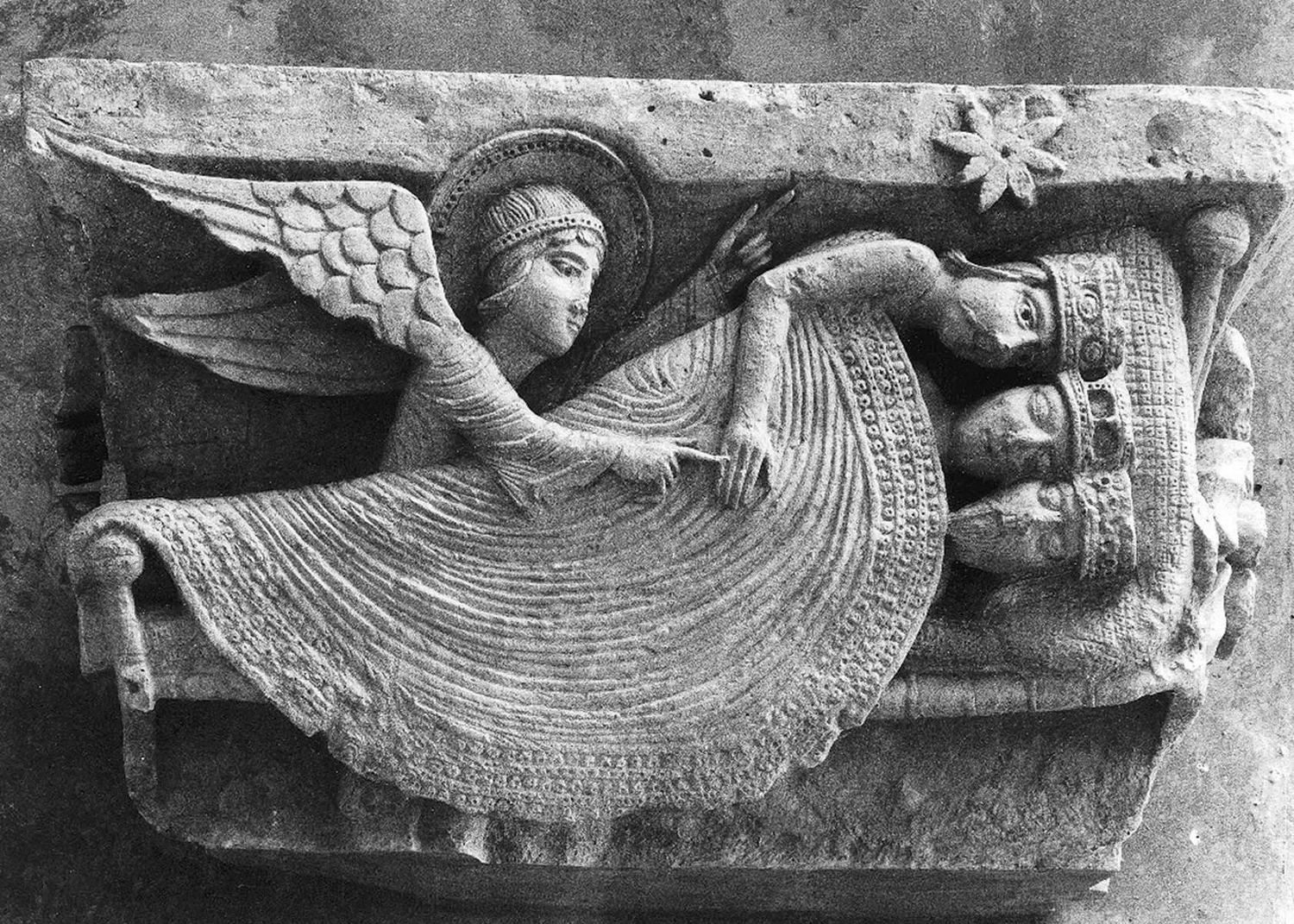
An Angel Appears to the Three Kings in a Dream
Gislebertus of Autun 1125-1135
(source)
The Magi listened to God’s “communicating cosmos” and heard a divine invitation in the unusual rising star.
Then, in Hebrew scriptures, foreign to them, they heard God’s voice through a human prophet from ages ago, and with that wisp of direction, they went trekking across deserts in search of a newborn King.
After they’d found and worshiped the Incarnate Son, they heard from God again — this time in a dream telling them not to return to Herod, but to go home by a different route.
While filtering Herod’s manipulative demands, their own thoughts and possibly an inner voice saying “Just stick to the plan!”, they chose to listen to and obey the Voice from the dream. Amazing!
What open ears and uninhibited trust these outsiders had. A beautiful model of clear-eyed discernment and unequivocal obedience.
TO PONDER
A prayer to precede all prayers, from C.S. Lewis:
May it be the real I who speaks.
May it be the real Thou that I speak to.