
Hungry for Goodness
LETTER BY BRIAN MORYKON
Blessed are you who weep…
Jesus opens his most famous sermon with a series of blessings for the poor, the hungry, the grief-stricken, and the hated. There are many layers here for us to unpack. One layer: God’s generosity is unlimited. Even the despairing and “spat upon” are blessable. The kingdom of God is for them, too.
Keep digging and we find another, perhaps more challenging layer…
Jesus doesn’t say that those who are sad and suffering are as blessable as others. He says they have a unique advantage — a leg up.
What advantage could they possibly have?
Appetite.
The blessings of the Kingdom of God don’t appeal to everyone. Jesus’ offer of a different life and a different king attracts some and offends others. The Woes he pronounced crystallize this truth.
Woe to you who are rich,
for you have already received your comfort…
In Gospel stories, people who turned away from Jesus thought they had something better going on — other sources of security, other pleasures to pursue. They already had a decent “kingdom” of their own, a life which offered enough comfort to make the gifts of God’s Kingdom seem downward and dull.
But to those who had no kingdom worth having, no creature comforts, the invitation of Jesus was beautiful.
In this week’s episode of Life With God, Walter Strickland explains the historical sufferings of African American Christians as “a crucible that pressed people into Christ.” Hardships can make people hungry for God to set things right.
So what does that mean for you and me?
I don’t take Jesus’ Blessings and Woes as wholesale ins and outs. The poor can still be ruled by a desire for worldly comforts. And the privileged can learn from Jesus how to give the Father full sway over all that they have. But if the Blessings and Woes are a general gauge of attraction or resistance to kingdom living, then I want to embrace every opportunity to whet my appetite for eternal goodness. I want to hold success lightly. I want to lean into struggle and be with the struggling.
Being a disciple means letting Jesus gently guide us—
into costly obedience,
into sacrifice and simplicity,
into heartbreaking places to discover God’s heart is to bless even there. Especially there.

Brian Morykon
Director of Communications
P.S. We are coming up on the 300th episode of Renovaré’s flagship podcast, Life With God, hosted by Nathan Foster! We would love to hear from our listeners — What question about living life as a follower of Jesus would you ask Nate? Send us your questions here by April 12.

Sign up for Renovaré Weekly
Thoughtfully introduced Christ-centered spiritual formation resources.

LET’S DIVE IN...
CURATED BY GRACE POUCH
-
1.
On the Life With God podcast this week, Nathan talks with Walter Strickland about how the African American Christian experience of suffering offers crucial wisdom to all of us who seek to live a with-God life.
-
2.
“For centuries, the church has been judged by its creeds and confessions, but today it is being judged by its deeds.” Read the 1939 sermon “The Significance of the Hour” by Adam Clayton Powell from Walter Strickland’s anthology Swing Low.
-
3.
“When we are full of ourselves or other things, we obstruct God’s grace.” Marlena Graves explores the way of self-emptying in imitation of our Lord Jesus.
– Grace
WORTH QUOTING
“The anxieties that torment me as I face the insecurity of my existence and the dark curtain of the future become the raw material from which I let God build my trust and my faith.”
– Helmut Thielicke (source)
TO CONTEMPLATE
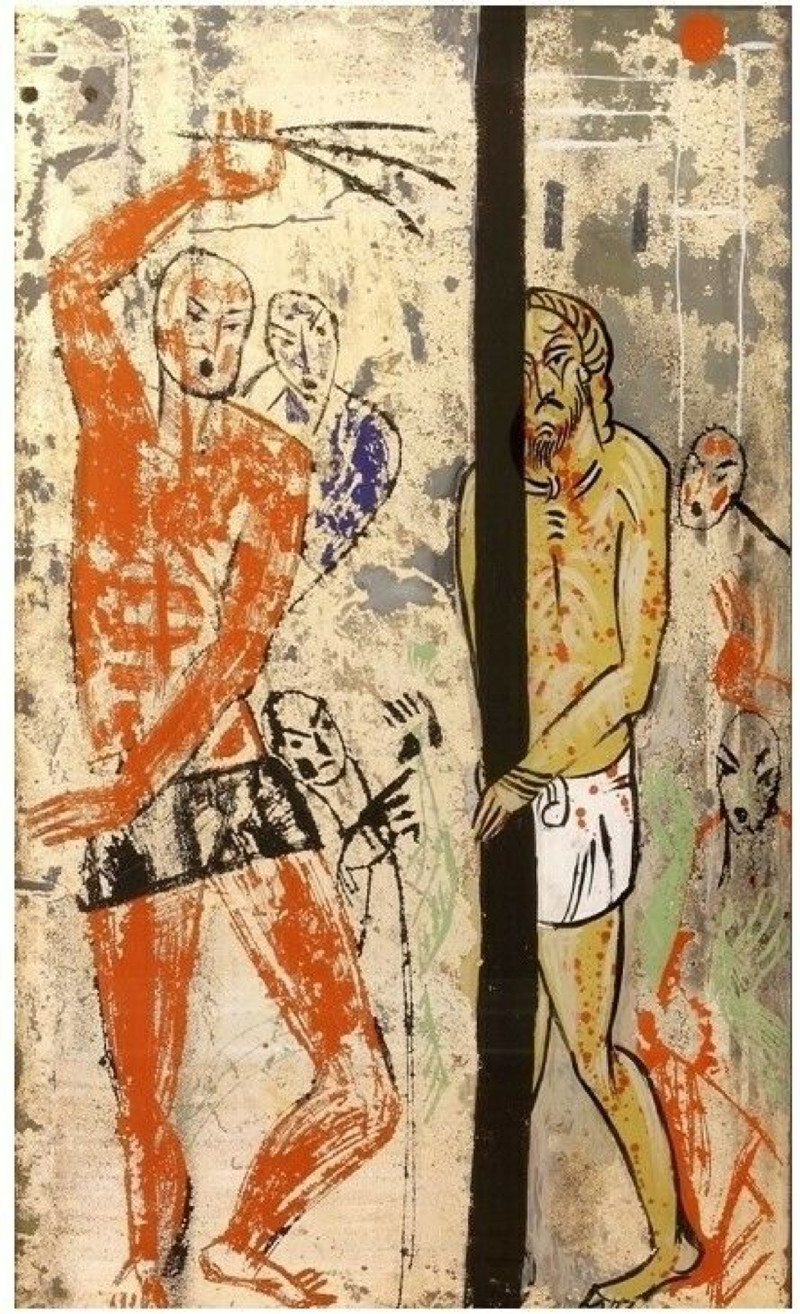
Flagellation
Ostap Lozynsky 2010
(source)
Spending time meditating on Christ’s sufferings can return us to a gnawing hunger for the goodness of life with God. Those who followed Jesus to the cross had an unforgettable glimpse of the world’s ugliness and Jesus’ beauty. They saw him model the radical mercy that he spoke about just after he gave the Blessings and Woes: “Love your enemies; do good to those who hate you; bless those who curse you; pray for those who mistreat you.” If I am blind to oppression, not only am I unable to pray authentically for the oppressed and act on their behalf, I have lost touch with the oppressor’s need for forgiveness and conversion. Ostap Lozynsky’s Stations of the Cross helps me to see this reality, and so see beyond myself.
TO PONDER
Recall a time of sadness or suffering when — in the long term — you received a blessing you couldn’t have otherwise received.