
We celebrated my husband’s fortieth birthday with an extravagant night out. At a posh Italian restaurant overlooking the park we had oysters and champagne, and then we strolled two blocks down Main Street to the theater. From our box seats we had a premium view of our favorite jazz musician in concert. It was a magical night of food, music, and a little taste of luxury.
As amazing as that celebration was, a different party ranks even higher in my catalog of favorite moments. It was our thirteenth wedding anniversary, and we had just moved into our hundred-year-old house. Our dishes were still in moving boxes. Every nook and cranny of the house was in a state of disorder or disrepair. House-poor and exhausted, I squashed any thought of splurging on an anniversary celebration.
But our children decided to make the day special for us in their own way. William and I were upstairs installing some blinds when our son Henry burst in to announce that we must “get fancy in wedding clothes right away!” So William put on a tuxedo jacket (with shorts), and I squeezed into my wedding dress and put on some costume jewelry.
We followed Henry down to the shabby screened porch to find the picnic table set with paper plates and a jar of flowers cut from the yard. The scene was embellished with hand-drawn signs and bows from the gift wrap drawer. And the crown jewel was a miniature wedding cake, baked and decorated by our daughter Charlotte.
Sitting there sweating in my wedding dress, eating cake baked by a nine-year-old off a paper plate, I felt completely content. It was the simplest of celebrations and also one of the sweetest.
Champagne Tastes
I do not intend to imply that the first party I described above — the fancy dinner and concert — is unholy. But I do want to contrast the two experiences as pictures of “the good life” and suggest that too much of the first kind of pleasure — the flashy, expensive kind — can desensitize us to the goodness of homespun festivities.
Wants tend to snowball, don’t they? The more we focus on getting, the more our emotions and impulses reflect “the nervousness and fury of acquisitiveness.“1 There is a powerful illusion that gaining will bring us closer to contentment, but once we have dedicated the bulk of our attention and energy to acquiring, acquisition itself has become our love. “We have given our hearts away,” to quote Wordsworth.2 And this is exactly what Jesus said would happen: “Where your treasure is, there your heart will be also” (Matthew 6:21).
If losing one’s heart to the false god of materialism was a threat in the time of Jesus, you can bet it’s still a threat today in our wealthy, consumer-centered society. Just think about the question “What makes a childhood good?” The first criteria that jump into most people’s minds are material blessings: economic stability, affording the best schools and extracurricular experiences, trips to Disneyland, toys, clothes, braces, cars, college, blowout birthday parties. But what about intangibles? None of those bought experiences can substitute for the greatest parts of childhood: a loving family, time in nature, time with God, memories, stories, friendships, and so on.
Jesus began his most famous sermon by explaining what makes someone well-off by God’s standards (Matthew 5:1 – 12; Luke 6:2023). His description of a good life surprised his audience then, and it still challenges us today. The people he identified as blessed were actually those whose experiences of hardship set them free from the illusion that contentment lies in acquisition, ease, power, and popularity. The poor, those who mourn, those who desperately long for justice, and the persecuted usually have a clearer perspective on treasures of the heavenly sort, like truth, love, belonging, spiritual gifts, and shalom.
“But woe to you who are rich,” Jesus continued (Luke 6:24). Counting on material possessions to satisfy you is a losing game. It substitutes something consumable for the imperishable joy of a with-God life and breeds ambition, greed, anger, and jealousy. This is how a heart comes to be ruled by money rather than by God. Of course, not every person with financial means is ruled by money. (I am thinking of wealthy friends who bless others out of their means. And people with middle or low incomes can be just as self-centered and money-obsessed as rich folks.) But Jesus is pointing out that people who live like kings in this world are more susceptible to giving their hearts to the love of money.
Whole books have been written on the subject of Jesus’ blessings and woes, so I humbly offer my thoughts on how Jesus’ sermon can help us rethink our image of a good childhood:
- Having less can actually help kids be content.
- Materialism is a false value system that ignores the deepest needs of the human soul.
- True joy comes not from external conditions, but from receiving God’s love and becoming the kind of person who can freely love God and others without selfishness getting in the way.
Slowing It Down with Simple Tastes
The good news is that there are ways to help kids cultivate a palate for the things that Jesus calls good. “Champagne tastes” are acquired. So are simple ones.
A child’s concept of the good life can be straightened out later in life, but the best-case scenario is to shape appetites from the start that will guide kids in a healthy direction now and in the future. Whether you have young children who are just beginning to conceptualize these ideas or older teens and young adult kids who have already absorbed a lot of messages, just remember that tastes are malleable. Take a good look at your children. What do they love? What do they naturally turn to for comfort? Which of your child’s existing desires already align with God’s heart?
When Charlotte was much younger, one of her teachers gave a similar prompt as a journal assignment. Students were to draw a heart on their page and fill it with happy words. Then outside the heart, students could write about things they dislike. Inside Charlotte’s heart, she had written: reading, cats and kittens, storms, God, art, family, shopping, ice cream, twice-baked potatoes, Easter, friends, Christmas, church, travel.
Conspicuously written outside the heart were the words bird poop and tights (which made it crystal clear how much she hated wearing tights).
Sometimes just asking our children what makes them happy can give us great clues about the free, renewable sources of delight that they already value — like family time, reading, music, and the beauty of nature. And as with Charlotte’s descriptions, listening to our kids can help us to become aware of their consumer-focused desires. Before analyzing too quickly, simply notice.
Next, you can begin to gently mold those appetites by feeding the tastes that will serve your children well and subduing the ones that could escalate into unhealthy fast-consuming habits. The material items and pricey experiences that a child might crave aren’t necessarily things we need to withhold, but my approach is to make those things rare treats. (And occasionally my kids make requests that I will never gratify, for their own good.) The point is that when we slow down consuming and play up other sources of enjoyment, we strengthen our kids’ ability to find contentment in simplicity.
Children’s ideas about what is normal are warped by what they see other people doing. In the same sermon where Jesus preached about blessings and woes, he repeatedly used the phrase “You have heard that it was said … but I say to you …” (see Matthew 5). Our world is constantly sending us the message that we must spend and accumulate more and more. We have heard it said that this is the way to find contentment. But Jesus tells a different story. A powerful way to encourage simple tastes is to expose kids to countercultural examples of generous ownership and slow spending that confront the insanity of consumerism and offer them a new vision of normal — one where Jesus is the standard-setter.
How to Practice Simple Tastes
In many ways, my children have been my teachers about what really matters in this life. Very young children naturally have simple tastes. They want to be hugged. They delight in everyday wonders. They care nothing about impressing others with their net worth or storing up for the future. I want to share with you some practices that have helped us to continue cultivating that childlike clarity about what really matters (and what doesn’t):
1. Burst the bubble. If you live in a community of fast-paced, unchecked consumerism, it can really skew your child’s sense of what is normal. One way to help shape healthy ideas is to leave your bubble and expose kids to different pockets of society in your city. Even going to a grocery store in a different part of town can be eye-opening in a good way.
2. Scale-down parties. Every once in a while, a Pinterest-perfect party or lavish celebration can be fun, but I’ve noticed that the standards keep escalating. For kids, the truly memorable ingredients of a birthday or holiday celebration are togetherness and play, and those ingredients are free. Instead of thinking in terms of what to buy when you plan the next party, think about what you already have. Do you have a tent? Invite three or four friends to camp out in the backyard — hotdogs and s’mores are all you need! Have a bunch of sports equipment? Host a mini Olympics birthday party in the park, and play relay race games. Homemade, creative decorations, flowers and greenery from the yard, candlelight, and music — there are many ways to turn up the volume on cheerful times together without spending anything.
3. Physical closeness. What a wealth of joy God gives us through touch and attention! Notice the power of touch in this scene from Mark’s Gospel: “People were bringing children to him in order that he might touch them, and the disciples spoke sternly to them. But when Jesus saw this, he was indignant and said to them, ‘Let the children come to me; do not stop them.… And he took them up in his arms, laid his hands on them, and blessed them” (Mark 10:13 – 16). Though physical closeness can be commodified, it is meant to be freely available to each and every human. Offer your child a variety of experiences like holding a baby, receiving and giving lots of hugs, sitting in grandparents’ laps, passing the peace of Christ with handshakes at church, and being close to you — in the same room, rather than isolated so much of the time. Physical closeness has a surprising ability to touch kids’ hearts with a sense of wellbeing and joy.
4. Repetition. A taste for what’s next and what’s new can be subdued by practices that normalize repetition and reuse. Something as simple as eating the same basic ingredients for lunch every day for a week can break an escalating appetite for more and more specialty foods. At our house, we stay away from one-time-use activities and toys (the happy-meal type games that go in the trash after you use them). Don’t feel you need to press your child to take on a new hobby or new plaything just for the sake of something new. Children don’t get tired of doing the same thing over and over again. (Sometimes we might wish they would!) If we could learn from little ones to delight in repetition, we would find our lives thuch simplified.
5. Stories that shape values. Jesus consistently used stories to shape his disciples’ understanding of a good life. The Bible is the best of all stories for tuning kids’ hearts to his values. But fiction and historical stories are also wonderful for modeling others-centered love. A few of our favorites for kids at various stages are the books Little House on the Prairie and A Christmas Carol and the movies It’s a Wonderful Life and The Boy Who Harnessed the Wind.
Your life is one of the most impactful stories your kids will read as they decide whether or not to trust Jesus’ surprising, wonderful, and challenging message about the good life. When my “champagne tastes” get too demanding, my favorite way of returning to God’s truth about what matters is to get away from the marketplace completely and soak myself in nature’s un-ownable, immeasurable beauty, or to step away from adult concerns like bills and groceries and home improvements to simply play with my children. These are little ways to keep my own appetites for getting and spending in check and to reconnect with the Giver of all, who has the power to revive my delight in the simple things of life whenever it dips low.
The apostle Paul wrote, “I have learned the secret of being content in any and every situation, whether well fed or hungry, whether living in plenty or in want” (Philippians 4:12 NIV). I want to learn that secret too — learn it at the deepest level and pass it on to my dear ones.
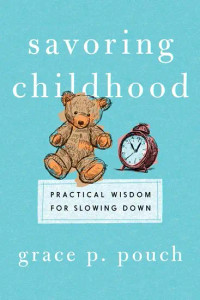
Adapted from Savoring Childhood by Grace P. Pouch. Copyright (c) 2026 by Grace Pate Pouch. Used by permission of InterVarsity Press. www.ivpress.com
Art: Children holding hands by Lisbeth Bergh (Norwegian, 1861-1927). Public domain.
First Published March 2026 · Last Featured on Renovare.org May 2026

Grace Pouch
Grace Pate Pouch is Content Manager for Renovaré where she curates and produces resources for spiritual renewal. She is the author of Savoring Childhood: Practical Wisdom for Slowing Down (IVP, 2026) and co-founder of the advocacy group Upstate Unplugged. She previously served as a seminary professor and Christian education specialist for elementary school children. Grace and her husband William live with their two children, Charlotte and Henry, in Greenville, SC.

Get spiritual formation articles like this each Friday
Renovaré Weekly is our thoughtful free newsletter with curated articles, books, and upcoming free webinars.
Explore More
-
Animal Friends
 Grace PouchExplore
 -
 EpisodeJoshua Luke Smith — This is the Main Event
 Nathan Foster & Joshua Luke SmithExplore
 -
 EpisodeGrace Pouch — Slowing Down and Savoring Childhood
Grace Pouch & Nathan FosterExplore
EpisodeGrace Pouch — Slowing Down and Savoring Childhood
Grace Pouch & Nathan FosterExplore -
EpisodeGod’s Voice, Avoiding Judgmentalism, & Children’s Deep Formation
 James Catford, Richella Parham & Grace PouchExplore


